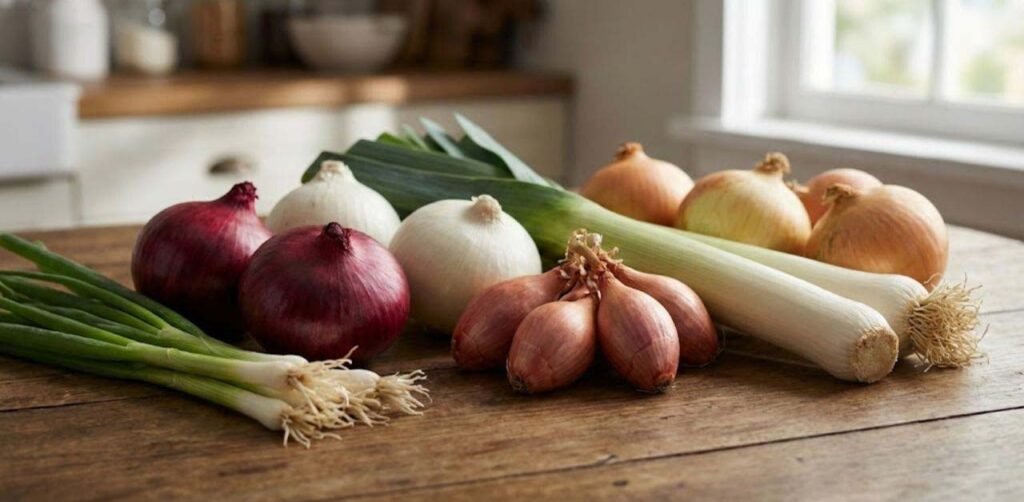
Onions are the “secret stars” of almost every recipe. For example, whether you are making a spicy salsa in the summer or a warm soup in the winter, the right onion makes all the difference. However, in fact, when you walk into any grocery store in the USA, and you will see a confusing pile of different shapes, sizes, and colors.
Understanding the different types of onions is the first step to becoming a great home cook. Some onions are sharp and crunchy, while others are sweet and soft. In this guide, we will break down every onion you need to know, when they are in season, and how to cook with them.
Why Choosing the Right Onion Matters
You might think an onion is just an onion, but that is not true. Each variety has a different amount of sugar and “sulfur” (the stuff that makes you cry). Using a sharp white onion in a delicate salad might ruin the flavor. On the other hand, using a sweet onion in a long-cooking stew might make it too sugary.
1. The Year-Round Kitchen Staples

These are the onions you will find in every American kitchen. They are available all year long and are very reliable.
Yellow Onions
Yellow onions are the most popular different types of onions in the world. They have a tough, papery skin and a strong, balanced flavor.
- Best For: Everything! Soups, stews, and roasts.
- Pro Tip: When you cook them for a long time, they turn brown and sweet. This is called “caramelizing.”
White Onions
In contrast, white onions are crunchier and have a sharper “bite” than yellow ones. They are very common in Mexican cuisine.
- Best For: Raw salsas, guacamole, and tacos.
- Season: Available year-round.
Red Onions
With their beautiful purple skin, red onions are the kings of the salad bowl. They are mild enough to eat raw but hold their shape well when grilled.
- Best For: Salads, burgers, and pickling in vinegar.
- Season: Peak flavor in late summer and fall.
2. The Sweet Onions (Best in Summer)

These onions have more sugar and less sulfur. Because they have more water, they do not last as long in your pantry as yellow onions.
Vidalia Onions
Grown only in Georgia, USA, these are famous for being incredibly sweet. You could almost eat them like an apple!
- Best For: Onion rings and sandwiches.
- Season: Spring and Summer.
Similarly, Walla Walla Onions
These come from Washington state. They are very juicy and have a very mild flavor.
- Best For: Eating raw or lightly grilled.
3. The Gourmet Favorites: Shallots and Leeks

If you want your food to taste like it came from a fancy restaurant, these are the different types of onions you should use.
Shallots
Specifically, shallots look like small, thin onions with copper skin. Inside, they look a bit like garlic cloves. Their flavor is a mix of onion and a hint of garlic.
- Best For: Salad dressings (vinaigrettes) and fine sauces.
Leeks
Furthermore, Leeks look like giant green onions. You only eat the white and light green parts. They have a very creamy, mild taste when cooked.
- Best For: Potato leek soup and creamy pasta dishes.
- Season: Fall through Spring.
Quick Comparison Table: Which Onion Should You Use?
| Onion Type | Flavor Profile | Best Cooking Method | Best Season |
| Yellow | Strong & Balanced | Sautéing / Roasting | All Year |
| White | Sharp & Crunchy | Raw / Mexican Food | All Year |
| Red | Mild & Spicy | Raw / Grilling | Summer / Fall |
| Sweet | Very Sweet | Frying / Rings | Spring / Summer |
| Shallots | Subtle / Garlic-like | Sauces / Dressings | All Year |
| Leeks | Creamy / Mild | Soups / Braising | Winter / Spring |
4. The “Green” Onions (Spring Specialties)

These varieties are often harvested before they are fully grown. Consequently, they add a pop of color and a fresh taste to your seasonal recipes.
- Scallions (Green Onions): These have a white bottom and long green tops. For the best results, use the white part for cooking and the green part for a garnish.
- Chives: Although, technically a herb, but they belong to the onion family. They are very delicate and should be added at the very end of cooking.
- Spring Onions: These look like scallions but have a small bulb at the bottom. In addition, they are sweeter than regular scallions.
5. Small but Mighty: Speciality Onions

- Pearl Onions: These are tiny, about the size of a marble. They are sweet and look beautiful when cooked whole.
- Usage: Great for “Coq au Vin” or pickled in a jar.
- Cipollini Onions: These are flat and small. They have a very high sugar content.
- Usage: Best for roasting whole until they turn dark and sticky.
Expert Tips for Buying and Storing Onions

To make sure you get the most out of different types of onions, follow these simple rules:
- The Feel Test: First of all, always choose onions that feel heavy and firm. Avoid onions that have soft spots or look like they are starting to grow green sprouts.
- The Dark Rule: Store your big onions (Yellow, White, Red) in a cool, dark, and dry place. Do not store them with potatoes, because potatoes release a gas that makes onions rot faster!
- The Fridge Exception: Sweet onions, leeks, and green onions should be kept in the refrigerator because they have a higher water content and spoil quickly.
Frequently Asked Questions (FAQ)
Moreover, you might wonder: Can I use a red onion instead of a yellow onion?
Yes, you can! However, remember that red onions might turn your dish a slightly bluish-purple color. For soups, yellow is usually better, but for a burger topping, red is the winner.
Why do onions make me cry?
Specifically, when you cut an onion, it releases a gas that causes your eyes to water. When this gas touches the water in your eyes, it creates a tiny bit of acid. To stop the tears, use a very sharp knife or put the onion in the fridge for 30 minutes before cutting.
Are onions healthy?
Absolutely! Onions are full of Vitamin C and antioxidants. They are great for your heart and help fight inflammation.
Conclusion
Mastering the different types of onions is a simple way to level up your cooking. Whether it is the crunch of a white onion in your summer salsa or the richness of a caramelized yellow onion in a winter stew, there is a perfect bulb for every season.
Would you like me to create a specific seasonal recipe using one of these onions, or perhaps generate an image showing the differences between them for your blog?